
Alfa Romeo.La passione.
Italian elegance. Racing instinct. A character all its own.
An appreciation of the history, design, and culture that make Alfa Romeo worth looking at a little longer.
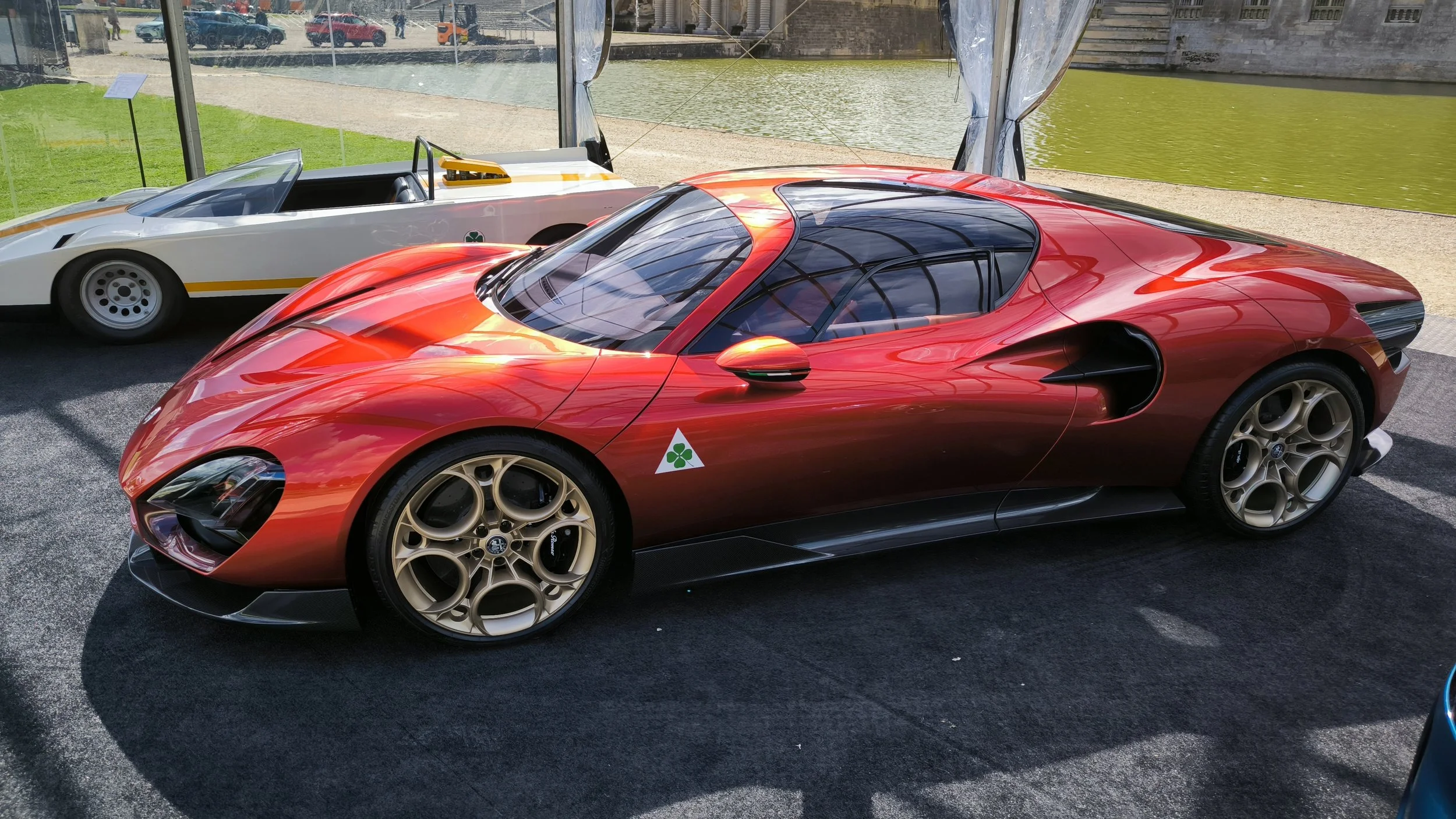

Elegance.
In motion.
Open roads, sweeping light, and a score that builds with the drive. A cinematic interpretation of the Stelvio spirit.
Beauty you can see.
Character you can feel.
Alfa Romeo sits at a compelling intersection: the precision of engineering, the imagination of Italian design, and the emotion of driving. The appeal is in the relationship between them—the line of a bonnet, the purpose of an air intake, the way a car seems ready to move while standing still.
A history
with a pulse.
From the workshops of Milan to the roads of Sicily and the first Formula 1 world titles. Six moments that help explain the marque.
Explore the museum’s racing archive ↗Milan. The beginning.
+
A.L.F.A.—Anonima Lombarda Fabbrica Automobili—was founded in Milan on June 24, 1910. The 24 HP began the story. The badge carried two Milanese symbols: the city’s cross and the Visconti serpent, or Biscione. Alfa Romeo’s identity was rooted in a place before it became known around the world.
A clover becomes a legend.
+
Ugo Sivocci won the Targa Florio in an RL bearing a four-leaf clover. A personal good-luck symbol began its transformation into the Quadrifoglio, an enduring connection between Alfa Romeo and competition.
A world championship.
+
The P2 helped Alfa Romeo win the first World Championship for Grand Prix cars. This was the manufacturers’ championship of its era, decades before the Formula 1 championship began.
The first Formula 1 champions.
+
Giuseppe “Nino” Farina won the inaugural Formula 1 drivers’ championship in the 158 Alfetta. Juan Manuel Fangio followed in 1951 with the 159. The names of the drivers and the cars became part of the same racing legend.
Sporting character, everyday life.
+
The Giulietta Sprint debuted in 1954; the Giulia followed in 1962. Their significance reaches beyond competition: Alfa Romeo brought engineering ambition and a distinct Italian identity into cars made for the road.
The road becomes an art form.
+
The 33 Stradale translated the Tipo 33 racing project into a road car. Franco Scaglione’s bodywork joined mechanical purpose with extraordinary proportions. Its influence would reach far beyond its tiny production run.
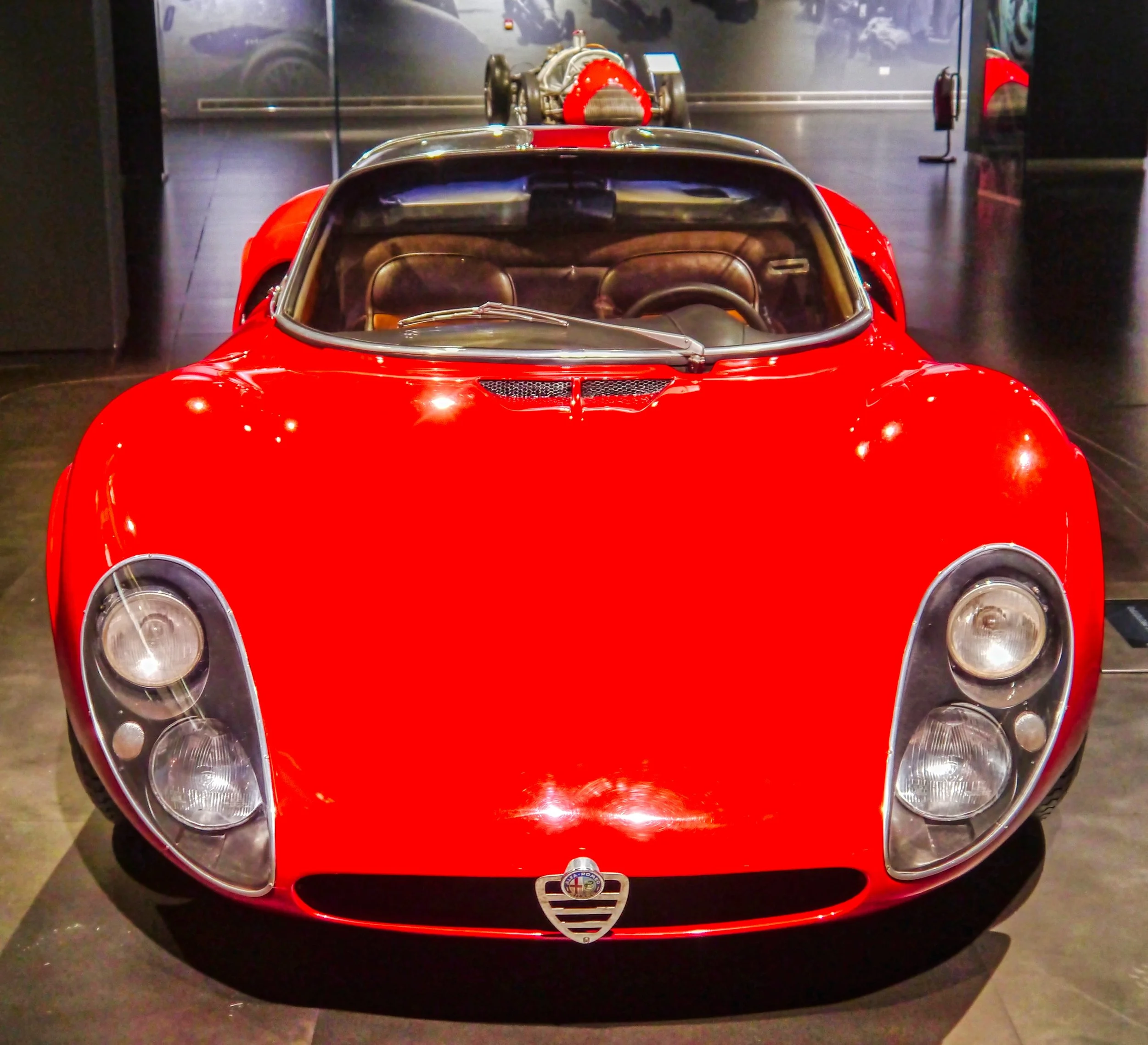

A sculpture.
With a purpose.
The 1967 33 Stradale is a remarkable expression of Alfa Romeo’s idea of “necessary beauty”: a shape informed by the machine beneath it. Franco Scaglione turned the constraints of a racing chassis into flowing surfaces, a low silhouette, and a cockpit that feels almost like a glass canopy.
Only 18 chassis were produced. The prototype in Arese preserves an extraordinary meeting of engineering and coachbuilding. The modern 33 Stradale, unveiled in 2023, revisits that conversation in a new form.
For me, the fascination is in that balance. A beautiful object becomes more interesting when its details have a reason to exist.
Different forms.
Unmistakably Alfa.
A compact coupé, an open roadster, and a rare sports car. Each reveals a different side of Italian motoring.
Four leaves.
A lasting symbol.
The Quadrifoglio began as a good-luck emblem on Ugo Sivocci’s RL at the 1923 Targa Florio. His victory gave it a place in Alfa Romeo’s racing story. It later became a badge for the marque’s most sporting road cars.
A small emblem can carry an enormous amount of history. Here, it connects a modern car to a driver, a race, and a moment more than a century ago.
More than a marque.
A shared language.
The culture around Alfa Romeo gives the history a life beyond the museum. Enthusiasts—the Alfisti—keep the connection alive through clubs, gatherings, restoration, and the exchange of knowledge.
There is room in that world for a rare classic and a familiar daily driver. The common thread is attention: to how a car was made, what gives it character, and the pleasure of sharing that interest with someone who understands it.
That is what draws me to the marque. Italian elegance has the most presence when proportion, detail, and purpose work together. Alfa Romeo offers a particularly expressive way to explore that idea.
Explore the Alfisti communityMilano.
The cross and Biscione on the badge keep the brand’s Milanese roots visible. Even a small detail can tell you where a design comes from.
Carrozzeria.
Bertone, Pininfarina, and Zagato belong to the coachbuilding tradition woven through Alfa Romeo’s history. Different design voices helped give the marque its range of expression.
Alfisti.
A community makes the archive a living thing: stories passed on, details noticed, and cars cared for so they can be enjoyed again.
Go a little
deeper.
Museo Alfa Romeo
The collection, the people, and the cars behind the story.
Explore the museum ↗02 / THE ARCHIVEStorie Alfa Romeo
The marque’s own stories about its landmark cars.
Read the stories ↗03 / THE COMMUNITYFind the Alfisti
Discover the network of Alfa Romeo clubs around the world.
Discover the clubs ↗An independent enthusiast feature by Sander Luckinbill.
Reading & photograph credits
Historical reading: Alfa Romeo history, the museum’s racing archive, Giulietta history, and Franco Scaglione and the 33 Stradale.
Modern 33 Stradale: Y.Leclercq, via Wikimedia Commons. Original 33 Stradale prototype: Zairon, via Wikimedia Commons. Both photographs are licensed CC BY-SA 4.0. Display crops and tonal styling are applied on this page; photographic derivatives retain that license.